

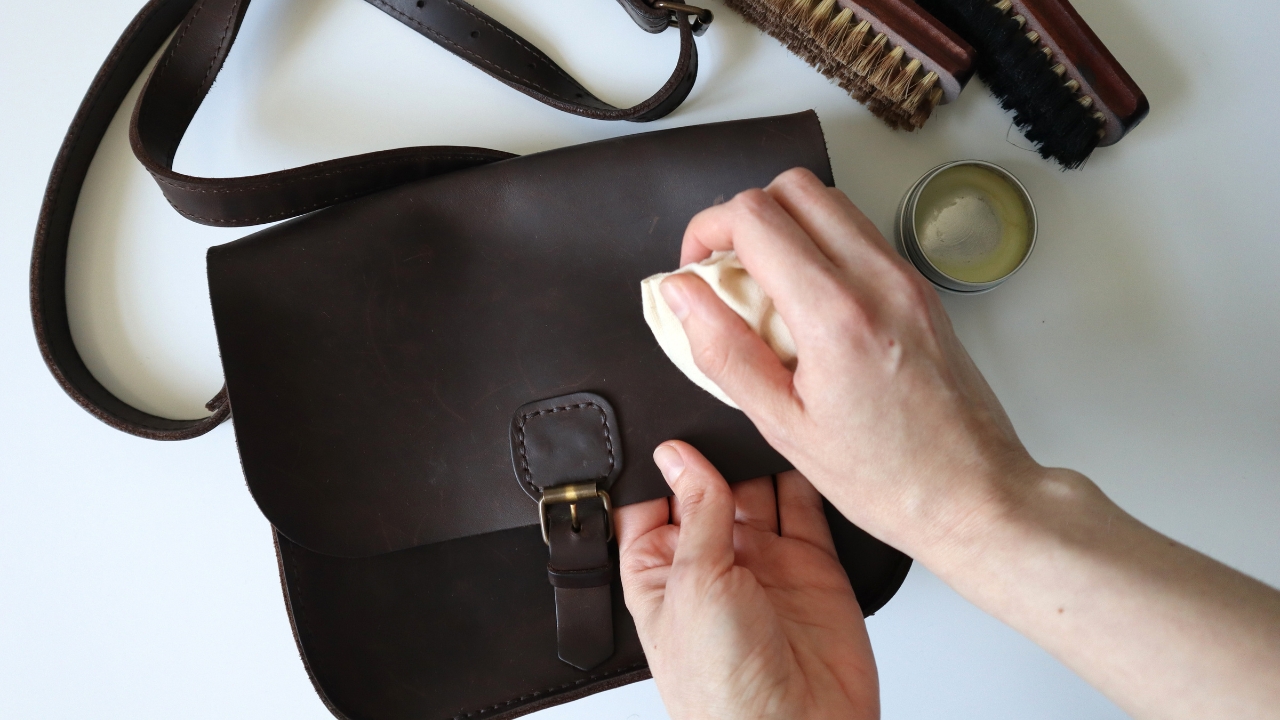
A leather stain can feel permanent before you even touch it. Water darkens the grain, oil sinks in slowly, and a hard scrub can leave a shiny patch that looks worse than the original spill.
The safest way to remove a stain from leather without leaving a mark is simple: blot fast, identify the finish, test in a hidden area, use the mildest method first, and avoid soaking the surface.
Leather rewards restraint. Strong cleaners, heat, vinegar, alcohol, and heavy rubbing often cause rings, fading, stiffness, or dull patches. A careful first response gives a bag, jacket, sofa, wallet, or pair of shoes a much better chance of looking even after cleaning.
Table of Contents
Know The Leather Before You Clean
View this post on Instagram
Leather is not one uniform material. A full-grain leather bag from Grainmark Leather needs a different level of caution than a heavily coated car seat, because natural leather can show moisture, oils, and cleaning marks more easily. A coated car seat, suede boot, patent shoe, and full-grain briefcase all react differently.
The Canadian Conservation Institute notes that water damage depends on leather type, processing, finish, and condition. Vegetable-tanned leather can shrink, stiffen, darken, or develop surface staining when exposed to water.
Start by checking the care label or brand guidance. If none exists, look at the surface.
| Leather surface | How it usually behaves | Safer first move |
| Protected or pigmented leather | More resistant, common on sofas and car seats | Blot, then use a barely damp cloth |
| Aniline or semi-aniline leather | Absorbs moisture faster, shows natural grain | Dry blot first, then specialist cleaner |
| Suede | Soft nap, stains easily | Blot, dry fully, brush gently |
| Nubuck | Fine velvety surface | Dry methods before moisture |
| Patent leather | Glossy coated finish | Damp cloth, then dry buff |
A hidden water-drop test can help. If a tiny drop beads up, the finish has some protection. If it darkens fast, avoid water-heavy cleaning.
Why Leather Stains Leave Rings
A visible ring usually comes from uneven wetting. The stain may fade, yet the cleaning area dries lighter, darker, shinier, or duller than the surrounding panel. On absorbent leather, moisture can pull soil, oils, dye, or tannins across a wider area.
Iowa State University Extension advises air drying wet leather away from heat and storing it in cool, ventilated conditions, since dry heat can dehydrate leather and damp storage can encourage mildew.
Western Australia’s museum conservation guidance also favors low-risk cleaning first, such as careful dust removal with a soft brush or vacuum on sound leather.
The aim is not aggressive stain removal. The aim is an even surface.
The Safe Method For Most Fresh Stains
For most fresh leather stains, the safest approach is to act quickly but calmly, using gentle blotting, minimal moisture, and a hidden spot test before any cleaner touches the visible surface.
Blot, Never Scrub
Use a clean white cotton cloth or plain white paper towel. Press gently, lift, move to a dry area, and repeat. Do not rub, because rubbing drives liquid deeper and can change the surface sheen.
Tiffany’s leather care advice for water stains recommends removing spills with a clean, absorbent white cloth or sponge. If residue remains, the brand advises plain lukewarm water used carefully, followed by blotting and air drying.
White cloth matters. Colored towels, napkins, or denim can transfer dye onto pale leather.
Remove Loose Dirt First
Dust and grit become abrasive once moisture enters the job. Wipe smooth leather with a dry microfiber cloth before any damp cleaning. On suede or nubuck, wait until the area is dry, then use a suede brush with light pressure.
For sofas and car interiors, use a soft brush attachment and keep the vacuum nozzle from dragging across the surface.
Test In A Hidden Area
A spot test is the step people skip, then regret. University of Georgia Extension warns that cleaning agents should be pretested in a hidden area for colorfastness.
Choose an inner flap, seam, underside, back corner, or under-cushion area. Apply a tiny amount of the planned cleaner. Let it dry fully. Look for color lift, darkening, stickiness, dullness, or roughness.
If the test patch changes, stop.
Use Minimal Moisture
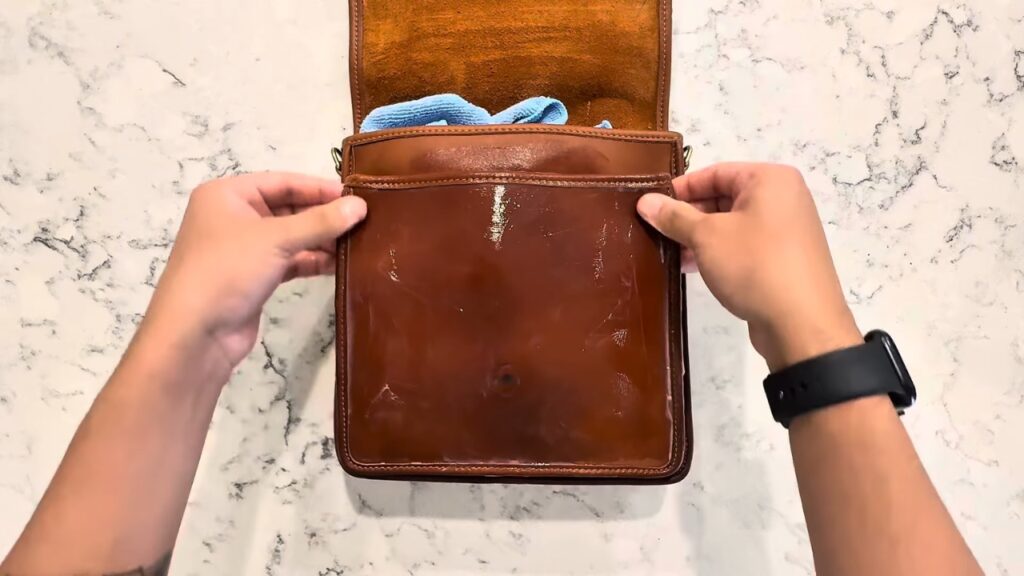
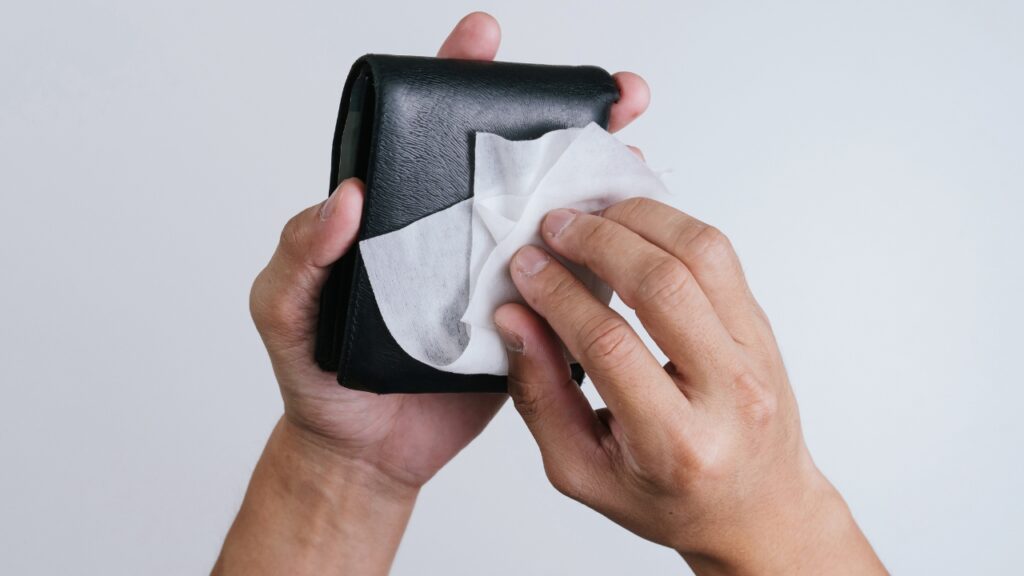
Use a barely damp cloth and light pressure; never apply liquid directly to leather
For protected leather, dampen a white cloth with lukewarm water. The cloth should feel barely damp. Blot around the outer edge of the stain, then move inward with light pressure.
For mild food residue or surface dirt, use a small amount of pH-balanced leather cleaner on the cloth, never directly on the leather.
Altfield’s leather care guidance recommends testing first, blotting spills, avoiding direct liquid application on aniline or semi-aniline leather, and letting the area dry before repeating.
One light pass is safer than one wet pass.
Let It Dry Naturally
Air dry at room temperature. Keep leather away from radiators, sunny windows, hair dryers, heated vents, and fireplaces. Heat can set stains, shrink fibers, or leave a brittle patch.
For shoes, stuff the inside with clean white paper. Avoid newspapers because the ink can transfer.
Condition After Drying
Conditioner helps restore feel after cleaning, but it does not remove stains. Use a conditioner suited to the leather finish. Apply a small amount to a cloth, spread thinly, wait, then buff.
Too much conditioner can darken leather or leave a greasy film.
How To Handle Common Leather Stains
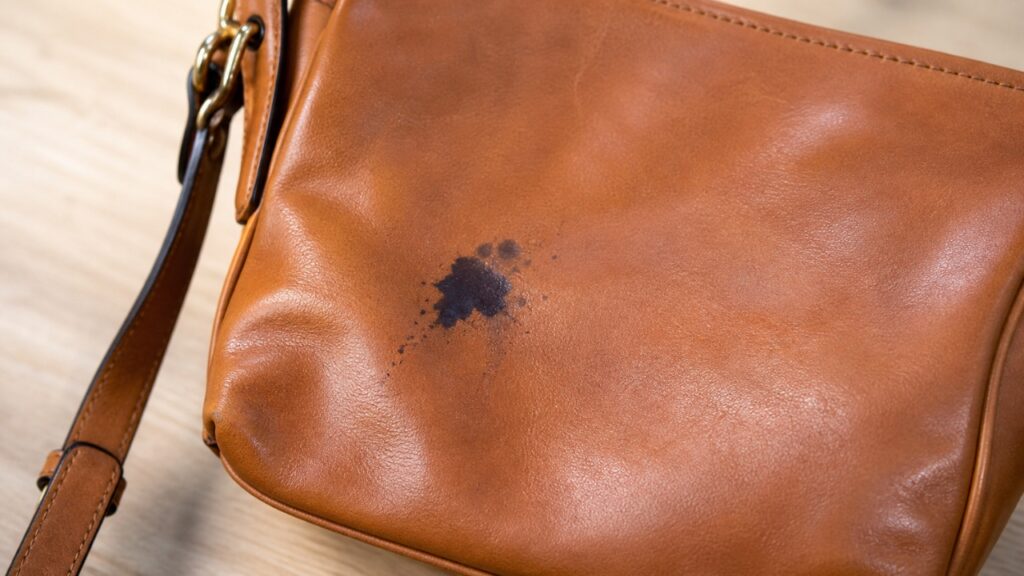
Identify the stain type first, then use the gentlest method suited to that specific mark
Different stains behave differently on leather, so the safest approach starts with knowing what caused the mark before choosing a cleaning method.
Water Marks
Fresh water marks often improve with careful feathering on protected leather. Use a barely damp white cloth and wipe lightly across a wider panel, ideally from seam to seam, then blot dry.
On aniline, suede, nubuck, antique, or vegetable-tanned leather, professional care is safer because water can deepen the mark.
Oil And Grease
Blot without pressure. Sprinkle cornstarch or plain talc over the spot and leave it for several hours. Brush away gently. Repeat once if needed.
Avoid dish soap on absorbent leather. It may cut grease, but it can also disturb dye or leave a dull patch.
Ink
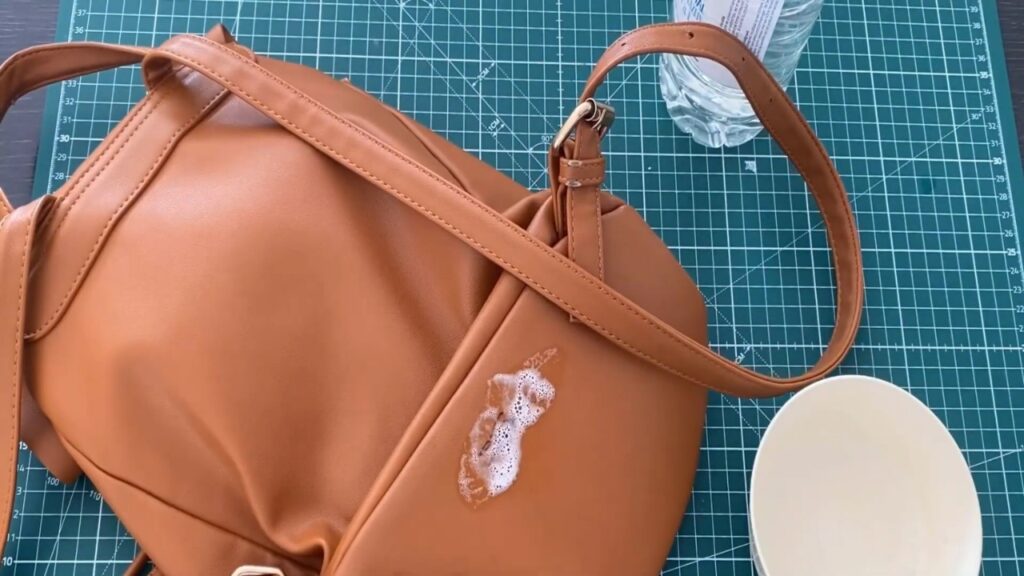
Ink stains can set into leather, and harsh solvents can strip color, so use a tested remover or seek a specialist
Ink is risky because many inks act like dyes. Do not rub alcohol over the stain unless the maker allows it. Alcohol can remove the finish and color.
For a tiny mark on protected leather, a leather ink remover made for finished leather may help after a spot test. Large ink stains usually need a specialist.
Coffee, Tea, Wine, And Juice
Blot immediately. On protected leather, follow with a barely damp cloth and leather cleaner if residue remains. Sugary spills can dry sticky, so use 2 very light passes rather than a wet scrub.
Pale leather stains faster, especially from coffee, red wine, and berry-colored drinks.
Shoe Polish Or Dye Transfer
Polish and dye transfer are among the hardest marks. University of Georgia Extension describes shoe polish on leather as difficult and sometimes nearly impossible to remove, recommending commercial leather cleaner first and cautious solvent use only after testing and label directions.
Denim dye on cream leather behaves in a similar way. Early cleaning matters because dye bonds more deeply over time.
Products And Home Remedies To Avoid
Many popular fixes are too harsh for leather. Avoid:
Saddle soap also needs caution. Western Australia’s museum guidance raises concern about alkaline saddle soaps for museum leather and says use is not recommended for objects in storage or display. For some boots or saddlery, a maker may allow it. For handbags, jackets, furniture, or luxury goods, a dedicated leather cleaner is usually safer. Stop home cleaning if the stain is large, old, oily, sticky, or darker after drying. Also stop if color transfers to your cloth, the surface feels tacky, or the item has high resale or sentimental value. Professional leather cleaners can handle controlled cleaning, color correction, finish repair, and reconditioning. Iowa State University Extension notes that old, set stains cannot always be removed safely, and leather garments may show color or texture variation after cleaning because skins vary in dye uptake and finish. Keep leather dry, clean, and stored in breathable bags to prevent stains and damage Prevention is simpler than repair. Keep leather away from wet counters, pens, hand sanitizer, cosmetics, perfume, and dark denim. Wipe protected leather weekly with a dry cloth. Use a protector spray only when the maker allows it, especially on suede or nubuck. Store leather in breathable cotton dust bags, not plastic. Add clean white paper inside bags and shoes to preserve shape. Leather stain removal works best when the response is light and early. Blot first, test first, use minimal moisture, dry slowly, and condition only after the surface is fully dry. The same careful approach helps preserve smaller items like leather bill holders, where excess moisture or pressure can cause visible damage. The cleanest result usually comes from doing less with better timing.
When To Call A Professional
Keep The Next Stain From Setting
FAQs
Final Takeaway