


Signing a build contract can lock a buyer into years of financial exposure, construction decisions, payment obligations, and legal commitments.
A polished proposal and an attractive quoted price tell only part of that story.
Serious buyers investigate the site, builder, contract documents, pricing assumptions, payment structure, construction schedule, and quality controls before any signature appears on the agreement.
Careful due diligence turns promises into facts and exposes expensive problems while there is still room to negotiate.
Table of Contents
Check What Is Included in the Build Contract

Architectural plans, engineering drawings, specifications, quotes, inclusion schedules, and approved variations should describe the same project.
Promises made during sales meetings need special attention. Verbal assurances, showroom examples, brochures, renders, emails, and promotional images may have little value if they never appear in the signed documents.
Detailed specifications should cover major finishes and systems. Flooring, cabinetry, countertops, appliances, plumbing fixtures, windows, doors, insulation, HVAC equipment, lighting, paint, landscaping, driveways, and fencing should be described with enough precision to prevent later substitution disputes.
Package-based builders can make scope comparison easier, but buyers still need to read each specification closely.
Elythera Homes, for example, offers steel-frame home options with separate materials-only and construction-inclusive pricing, showing why buyers should confirm exactly which systems, finishes, and site works sit inside the quoted price.
A missing item can become an expensive surprise once construction is underway.
Property and Site Due Diligence Before Signing a Build Contract
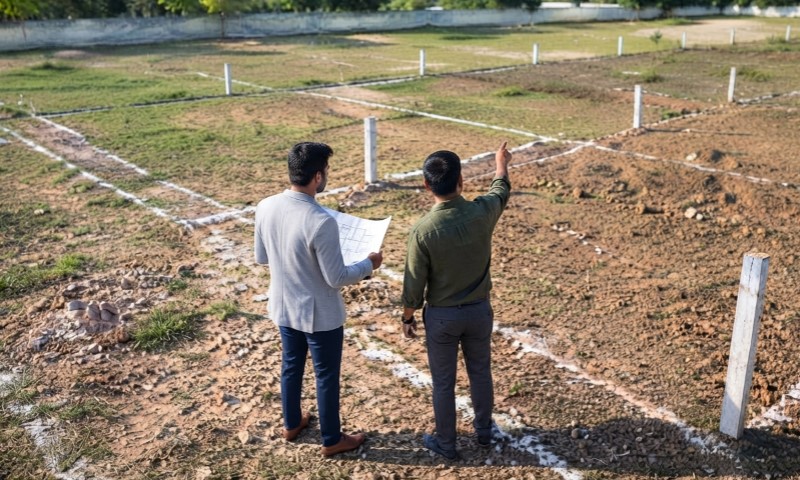
A current title search should confirm who owns the land and identify any mortgages, liens, easements, restrictive covenants, encumbrances, or other interests attached to it.
Ownership alone is not enough. Debts, access rights, use restrictions, and third-party interests can interfere with construction or reduce the usable portion of a lot.
A proper survey can identify issues that rarely show up in marketing material.
Buyers should verify boundaries, usable land, setbacks, encroachments, fence lines, structural footprints, and legal road access before plans are finalized.
Several site conditions deserve close review before design and pricing become fixed:
- Current zoning must permit the proposed building type and intended use.
- Rezoning proposals or planned infrastructure works may change access, density, noise, traffic, or future development options.
- Flood, wildfire, contamination, mould, radon, asbestos, and lead risks can affect construction cost, insurability, and financing.
- Water, sewer or septic, electricity, gas, and internet capacity should match the demands of the planned property.
- Utility extensions or upgrades can create major expenses that may not appear in the original quote.
Flood classifications deserve particular attention. A property inside a FEMA Special Flood Hazard Area has a 26% chance of suffering flood damage over a typical 30-year mortgage term.
Flood-zone checks can therefore affect site design, drainage requirements, insurance costs, foundation decisions, and the buyer’s total construction budget.
Radon also deserves more than a box-checking approach. Nearly one in 15 U.S. homes has a radon level that should be reduced, and mitigation is recommended when testing reaches 4 picocuries per liter or more.
Testing before construction decisions are finalized can reveal a need for radon-resistant design or mitigation measures while those changes are still easier to accommodate.
How to Vet a Builder Before Signing a Construction Contract
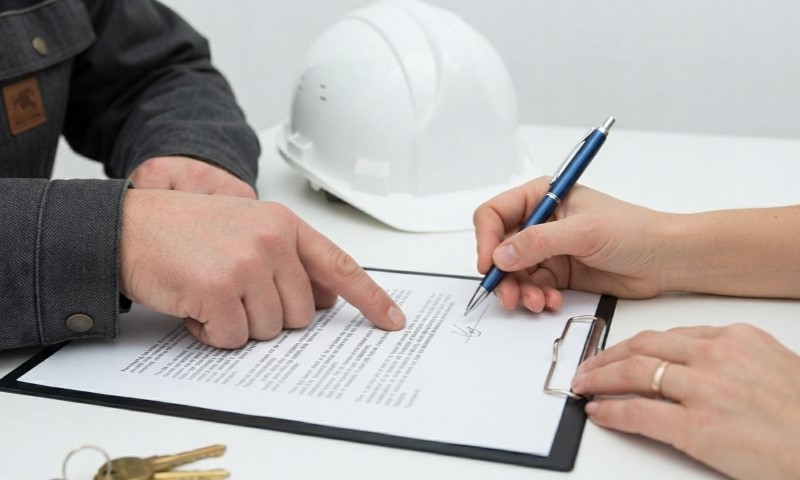
Licensing, registration, insurance, legal identity, project history, and financial reliability all matter because construction risk often depends on the company behind the contract.
Buyers should confirm the exact legal entity signing the agreement. Trading names, related companies, and parent entities can create confusion if a dispute later develops.
Active or pending litigation deserves attention as well.
Construction-defect claims, unresolved liens, insurance disputes, regulatory complaints, and other outstanding liabilities can expose recurring operational problems that a glossy portfolio will not show.
Insurance should be verified with actual documentation. Policy limits, exclusions, expiry dates, and relevant claims history can reveal gaps that would otherwise stay hidden until something goes wrong.
Completed projects offer another useful source of evidence. Recent clients can often explain how a builder handled scheduling, communication, defects, variations, payment disputes, and warranty claims.
Approval delays deserve similar attention.
More than half of surveyed builders, 53%, reported difficulty obtaining zoning or permit approval during 2025, while 57% identified impact, hook-up, inspection, or related fees as a significant problem. Responsibility for approvals and associated charges should therefore be spelled out before signing.
Calculate the True Cost of a New Build
Quoted amounts should be separated into fixed costs, provisional sums, allowances, estimates, and items that have not yet received final pricing.
Recent price movements show why that distinction matters. Prices for construction materials increased 5.3% over the 12 months ending August 2026, while construction components rose 5.0%.
Fixtures, flooring, appliances, excavation, site preparation, utility connections, and other major cost areas can make a quote look competitive even when realistic selections will cost much more.
Buyers also need to calculate expenses outside the base contract price. Common additions may include:
- Permits
- Engineering work
- Soil testing
- Site preparation
- Infrastructure upgrades
- Insurance
- Taxes
- Rates
- Landscaping
- Utility connections
- Retaining structures
- Drainage
- Specialist reports
Outstanding property liabilities should be checked before settlement or construction begins.
Unpaid rates, utility charges, debts, or other obligations can become an unexpected burden if responsibility is not clearly allocated.
Numbers should be independently verified whenever possible.
Builder estimates, seller representations, and projected costs need supporting evidence before they are treated as reliable.
A contingency is equally important. Soil problems, drainage issues, contamination, structural discoveries, engineering requirements, or unexpected site conditions can create major cost changes even after careful planning.
Review Construction Payments, Progress Claims, and Variations

Progress payments should match clearly defined construction milestones that can be independently confirmed.
Vague percentages or calendar-based payments make it harder to judge if money paid actually matches work completed.
Front-loaded schedules create particular risk because too much money can leave the buyer’s hands before equivalent value exists on site.
Variation procedures need equal precision. Changes should be documented, priced, approved, and signed before extra work begins.
Several pricing details should be clear before any variation is accepted:
- Builder margins should be disclosed.
- Administrative charges should be identifiable.
- Subcontractor and supplier costs should be documented where appropriate.
- Schedule extensions caused by the variation should be recorded at approval.
- Authority to approve changes should be limited to named individuals.
Verbal instructions should not automatically create chargeable work. Written authorization protects both parties and reduces later arguments about scope.
Site defects, title problems, pricing gaps, missing permits, or unclear scope can support a price adjustment, required remediation, contract condition, or walk-away right before the buyer becomes locked in.
Scrutinize the Timeline and Completion Terms
View this post on Instagram
Buyers need to know what must happen before work officially starts, including:
- Permits
- Finance approval
- Site access
- Demolition
- Design completion
- Engineering
- Selections
- Deposit payments
Contractual construction periods should be reviewed together with every clause allowing extra time.
Weather, approval delays, labor shortages, material shortages, subcontractor problems, supply disruptions, and buyer-requested changes can all extend completion.
Claims should ideally require evidence, notice, and defined time limits rather than broad retrospective assertions.
Practical completion deserves especially careful drafting.
A project should not be treated as complete merely because most visible construction has finished.
Completion criteria may include operating utilities, functional systems, required inspections, statutory certificates, safety compliance, and correction of major defects.
FAQs
Summary
Serious buyers treat a build contract like an underwriting decision, not a shopping comparison.
Land needs verification. Builder capability needs evidence. Scope needs precision. Pricing assumptions need testing. Payments need control. Variations need written approval. Completion standards need measurable conditions. Quality needs independent inspection.
Good due diligence converts assumptions into verified facts before contractual obligations become difficult or expensive to unwind.
Missing information does not automatically make a project unacceptable. Unresolved risk, however, should never be ignored. Buyers should identify it, price it, correct it, or protect against it in the contract before signing.