

There’s a particular kind of excitement that comes with owning your first boat. The water is waiting, the weather looks perfect, and every free weekend suddenly has a purpose. But between the marina and open water sits a short window where most boating problems can be caught before they become boating stories.
Experienced captains treat the pre-departure check as second nature, running through it the way a pilot walks around an aircraft. For new owners, building that habit early is one of the best things you can do for your boat, your passengers, and your own peace of mind. Below are seven checks worth making every single time you leave the dock.
Table of Contents
1. Fuel, Oil, and Fluid Levels
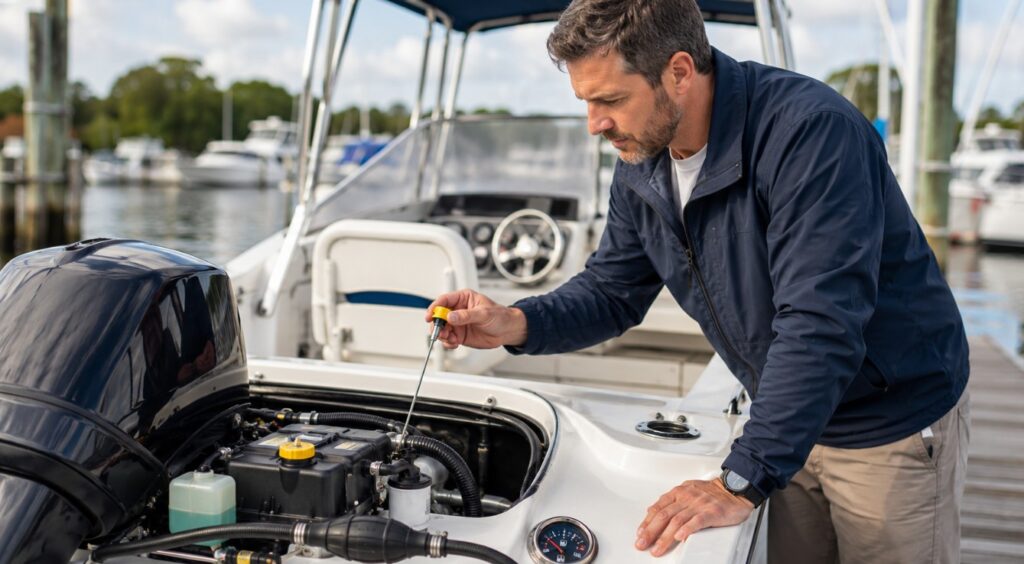
The old rule of thumb still holds: one-third of your fuel to get out, one-third to get back, and one-third in reserve. Fuel gauges on boats are notoriously optimistic, and conditions on the water can burn through more than you planned. Headwinds, chop, and a heavier load all increase consumption.
While you’re at it, check the engine oil and coolant levels, and glance at the fuel lines and primer bulb for cracks or soft spots. A two-minute inspection at the dock beats a tow back to the marina.
2. The Bilge and Drain Plug
It sounds almost too simple to mention, but forgotten drain plugs sink boats at launch ramps every season. Confirm the plug is seated and snug before the hull touches the water.
Once aboard, run the bilge pump manually to confirm it actually works, and check that the float switch triggers on its own. Water finds its way into every boat eventually; your bilge pump is the difference between a nuisance and an emergency.
3. Battery and Electrical Systems
Turn the battery switch on and watch your gauges come to life. Test your navigation lights, horn, and VHF radio even on a clear morning, because conditions change and afternoon fog doesn’t check the forecast first. A weak battery often gives a warning at the dock, cranking slower than usual, and that warning is far easier to act on at the slip than drifting a mile offshore.
4. Steering, Throttle, and Control Surfaces
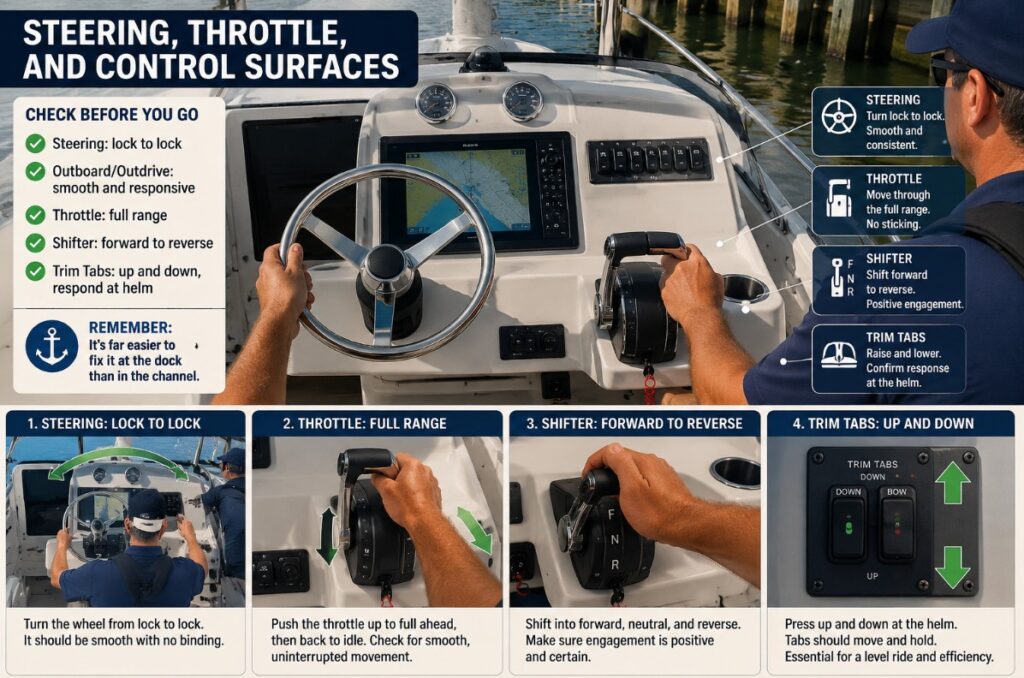
Before casting off, work the helm from lock to lock and confirm the outboard or outdrive answers smoothly, then move the throttle and shifter through their range while still tied off. This is also the moment to confirm your boat trim tabs respond correctly at the helm, since they do much of the quiet work of keeping your bow down, your ride level, and your fuel burn sensible once you’re underway. Stiff steering, a sticky throttle, or unresponsive tabs are all far easier to sort out at the dock than in a crowded channel.
5. Safety Gear and Life Jackets
Count heads, then count life jackets. You need a properly sized, accessible jacket for every person aboard, and children’s jackets need to actually fit the children wearing them.
Beyond that, run a quick inventory:
- Fire extinguisher charged and mounted within reach
- Visual distress signals (flares or flag) present and in date
- Sound signal (horn or whistle) working
- First aid kit stocked and dry
None of this gear matters if it’s buried under coolers and beach bags, so stow it where hands can find it fast.
6. Weather and Float Plan
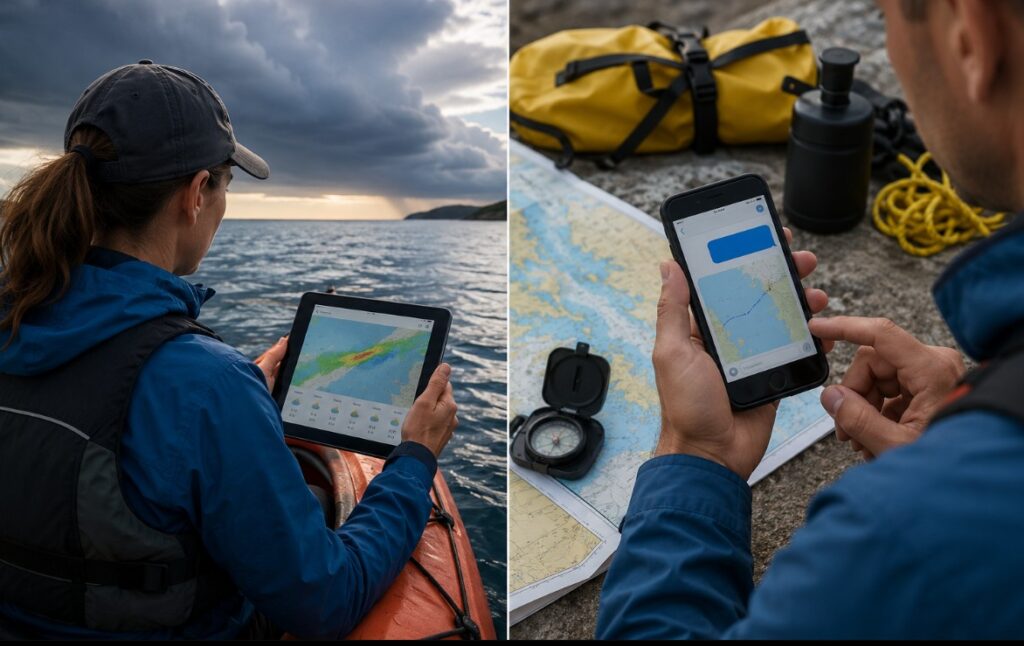
Check the marine forecast, not just the beach forecast. Wind speed, wave height, and storm timing matter far more on the water than air temperature does. If the forecast shows building wind in the afternoon, plan to be back before it arrives rather than racing it home.
Then tell someone on land where you’re going and when you expect to return. A float plan can be as simple as a text message, but it gives rescuers a starting point in the rare event things go wrong.
7. Hull, Prop, and Trailer Once-Over
Walk the boat before launch. Look for new cracks or dings in the hull, check the propeller for fishing line wrapped around the shaft, and confirm the anchor and dock lines are aboard and ready. If you trailer your boat, glance at the tires, lights, and winch strap too; plenty of boating days end in the parking lot instead of on the water.
Make the Checklist a Ritual, Not a Chore
Seven checks might sound like a lot standing between you and the water, but in practice the full routine takes about ten minutes once it becomes habit. The best boat owners aren’t the ones who never have problems; they’re the ones who find problems at the dock, where problems are cheap and easy. Build the ritual now, in your first season, and it will quietly pay you back for every season after.