


Have you noticed a lump or swelling in your neck that wasn’t there before? Has it lingered for weeks, felt firm to touch, or made you wonder whether it could be something serious? Swollen lymph nodes in the neck are a common finding and, in many cases, are linked to minor infections that resolve on their own. However, not all neck lumps behave the same way. Some persist, enlarge, or reflect underlying conditions that require careful medical evaluation.
Understanding how ENT doctors treat lymph nodes and when further investigation is necessary can make a crucial difference, particularly in identifying serious conditions early.
This article by the ENT Clinic in Singapore explains the common and more serious causes of neck lymph node swelling, how they are investigated using blood tests, ultrasound, and needle biopsies, and why assessment by an ENT (Ear, Nose, and Throat) specialist is often more appropriate than consulting a general surgeon in the first instance.
Table of Contents
What are lymph nodes and why do they swell?

Source: mdanderson.org
Lymph nodes are small, bean-shaped glands that form part of the immune system. They filter lymphatic fluid and help the body fight infections, inflammation, and abnormal cells. The neck contains a dense network of lymph nodes because it drains the upper aerodigestive tract, including the nose, mouth, throat, sinuses, and ears.
When the immune system is activated, most commonly due to infection or inflammation, lymph nodes can become enlarged, tender, or firm. This is known as reactive lymphadenopathy and is often self-limiting. However, not all swollen lymph nodes behave the same way, and certain features raise concern.
Common causes of swollen lymph nodes in the neck

Source: healthline.com
In tropical climates and densely populated environments, upper respiratory infections are the most frequent cause of neck lymph node swelling. Viral illnesses such as the common cold, influenza, infectious mononucleosis, and even COVID-19 can lead to temporary enlargement that settles within a few weeks.
Bacterial infections may also cause lymph nodes to swell, sometimes painfully. Dental infections, tonsillitis, skin infections, or abscesses in the head and neck region often result in localized lymph node enlargement. These nodes tend to be tender and may reduce in size once the infection is treated.
However, persistent lymph node swelling requires a broader evaluation. One important cause in the local context is tuberculosis (TB). Despite strong public health measures, TB remains endemic in Singapore. Tuberculous lymphadenitis often presents as painless, slowly enlarging neck nodes that may persist for months. In some cases, the overlying skin may become inflamed or break down if left untreated.
Another serious cause is lymphoma, a cancer of the lymphatic system. Lymphomas may present as firm, rubbery, non-tender nodes that progressively enlarge. Patients may also experience systemic symptoms such as unexplained weight loss, night sweats, prolonged fever, or fatigue.
Swollen lymph nodes can also be a sign of head and neck cancers, including cancers of the nasopharynx, oral cavity, larynx, or oropharynx. In these cases, the lymph node itself is not the primary problem but a secondary manifestation of an underlying tumour. This is particularly relevant in Southeast Asia, where nasopharyngeal carcinoma has a higher prevalence compared to Western populations.
When should a swollen neck lymph node raise concern?

Source: drleavers.com.au
While many lymph nodes resolve on their own, certain features warrant medical attention. Lymph nodes that are larger than 1–2 cm, persist beyond three to four weeks, or continue to grow should be evaluated. Nodes that are hard, fixed, non-tender, or associated with skin changes are also concerning.
Other red flags include:
- Unexplained weight loss or night sweats
- Persistent fever without clear infection
- Difficulty swallowing or voice changes
- A history of smoking, heavy alcohol use, or prior cancer
In Singapore’s healthcare setting, early evaluation is strongly encouraged, as timely diagnosis significantly improves outcomes, especially in malignancies.
How are swollen lymph nodes assessed?
Assessment begins with a detailed clinical history and physical examination. The doctor will ask about recent infections, dental issues, travel history, TB exposure, and systemic symptoms. The location and consistency of the lymph node provide valuable clues, as different regions of the neck drain different anatomical areas.
Blood tests are often the first step. Full blood counts, inflammatory markers, and specific tests for infections such as EBV, CMV, HIV, or TB may be ordered depending on clinical suspicion. Abnormal blood results can help differentiate between infection, inflammation, and haematological conditions like lymphoma.
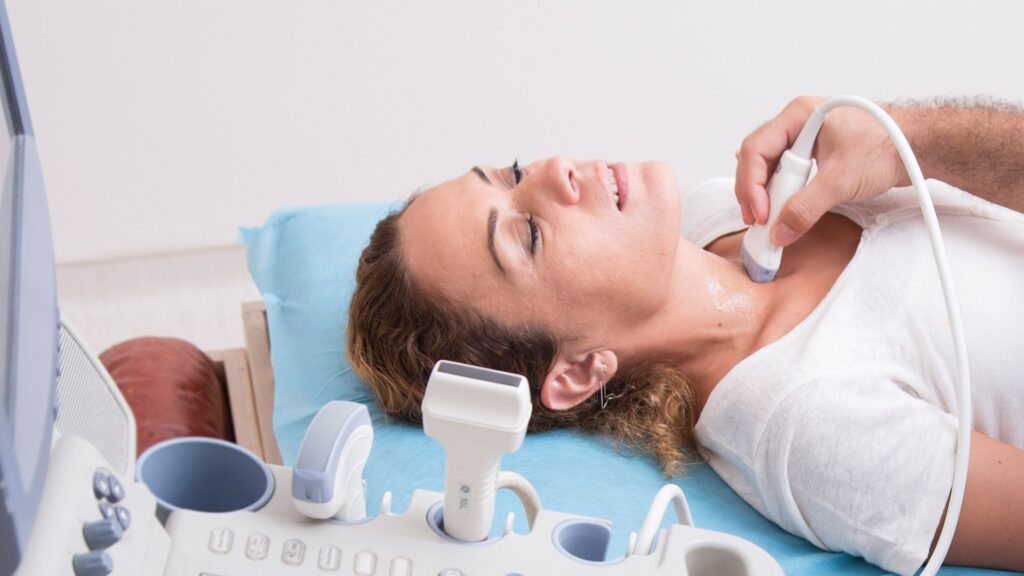
Ultrasound of the neck is a key investigation. It is non-invasive, widely available in Singapore, and provides detailed information about the size, shape, internal structure, and vascularity of lymph nodes. Certain ultrasound features can suggest whether a node is reactive or suspicious.
If imaging and blood tests do not provide a clear answer, a needle biopsy may be required. Fine needle aspiration (FNA) involves using a thin needle to extract cells from the lymph node for cytological analysis. In some cases, a core needle biopsy or excisional biopsy is necessary to obtain sufficient tissue, particularly when lymphoma is suspected.
Why seeing an ENT specialist matters

Source: okoa.org
One of the most important considerations in neck lymph node evaluation is who performs the assessment. While general practitioners play a crucial role in initial detection, persistent or suspicious neck lumps should ideally be evaluated by an ENT (Ear, Nose, and Throat) specialist rather than a general surgeon.
An ENT doctor is uniquely trained to examine the upper airways, including the nasal cavity, nasopharynx, oral cavity, throat, and larynx. Many head and neck cancers originate in these areas and may not cause obvious symptoms early on. Without a thorough endoscopic examination, the primary source of the lymph node swelling can be missed.
In contrast, general surgeons typically focus on the lymph node itself rather than the complex anatomy of the head and neck. This distinction is critical, particularly in Singapore, where nasopharyngeal and/or oropharyngeal cancers may first present solely as a neck lump.
Early referral to an ENT specialist in Singapore ensures comprehensive evaluation, appropriate investigations, and timely diagnosis.
Living in Singapore: local factors to consider
Singapore’s multicultural population, regional travel patterns, and TB prevalence mean that doctors must maintain a broad differential diagnosis when evaluating neck lymph nodes. Conditions like TB or nasopharyngeal carcinoma may present subtly, reinforcing the importance of specialist care and not adopting a “wait-and-see” approach for persistent swelling.
Additionally, Singapore’s healthcare system allows for rapid access to imaging and biopsies, enabling early reassurance or intervention. Patients are encouraged to seek assessment early rather than delay due to fear or uncertainty.
When should you see a doctor?
Source: integrishealth.org
Any neck lymph node that persists beyond a few weeks, enlarges, or is associated with concerning symptoms should prompt a medical review. While most causes are benign, early evaluation provides clarity, reduces anxiety, and ensures serious conditions are not overlooked.
Seeing the right specialist at the right time, particularly an ENT specialist, can make a significant difference in outcomes.
Final thoughts
Swollen lymph nodes in the neck are common and often harmless, but they should never be dismissed without proper evaluation. From infections and TB to lymphoma and head-and-neck cancers, the causes vary widely, and careful assessment is essential.
In Singapore, where advanced diagnostics and specialist care are readily available, early consultation leads to better answers and better health outcomes. If in doubt, trust your instincts and seek medical advice, because when it comes to neck lumps, timely evaluation matters.